Wednesday, October 31, 2012

Protecting Mediterranean Sea Is So Necessary Now

The Mediterranean Sea is home to more than 400 million people spread across 22 countries, of which 143 million people live on the coast, and about another 175 million visit the region each year. The well being of all these people depends on the health of the environment of the Mediterranean Sea.

The Mediterranean environment is one of the richest and at the same time one of the most vulnerable in the world as its marine and coastal environments are exposed to a combination of pressures, 80% of which come from land-based pollution.

More than half of urban areas on the Mediterranean with a population over 100,000 do not have waste water treatment plants and 60% of the wastewater produced in these areas is directly discharged into the sea. More than 80% of landfills in southern and eastern Mediterranean countries are not monitored. The marine environment of the Mediterranean is especially exposed to agricultural waste, airborne particles and river run-off, which carries pathogens, heavy metals, organic pollutants, oils and radioactive substances into the sea.


Rapid urbanisation coupled with increasing and unsustainable development of tourism in the Mediterranean Sea’s coast has contributed to significant environmental and health problems. Pollution from industry, shipping and households, the loss of open areas, and the destruction of coastal ecosystems for construction projects are also taking their toll.

In November 2006 a timetable of action for the Horizon 2020 Initiative was launched. One of these actions called on the European Investment Bank or World Bank to work with donor countries to identify projects which are having the largest impact on Mediterranean pollution levels - upstream and downstream pollution - across the Mediterranean Region.

The identification of priority hotspots investments were conducted by the European Investment Bank in cooperation with the United Nation's Environment Programme's Mediterranean Action Plan. The activities of the MeHSIP will primarily focus on providing support to the Horizon 2020 initiative and partner countries in implementing priority pollution reduction investment projects.

The EIB will now proceed in finalising a list of projects under the Mediterranean Hotspot Investment Programme based on the 44 projects already identified in seven Mediterranean countries. Among the criteria for determining the potential investment in projects are the projects' importance for the country or the Mediterranean region, how significantly they reduce pollution, the sustainability of the operations, and the loan repayment capacity of the projects' promoters and the amounts required from donors.

Sunday, September 16, 2012

There Is A List Of Beautiful European Beaches

Beautiful beaches are sure to be targeted tourist as one vacation destination. Did you know, beaches with exotic sights not only in the tropics area, in continental Europe there are also many beautiful beach. The following is a list of beautiful European beaches.


Patara beach

Patara is a coastal village located on the Turkish Riviera, in the south of Turkey. This beach is the longest beach in the Mediterranean, with beautiful white sand. According to legend, Patara was the birthplace of Apollo and in the work of the old Roman rule, Patara became one of the most important ports in the Western Mediterranean. As evidence, on the beach there are relics of the ancient Romans in the form of archaeological sites.

Behind the beach, sand dune beaches adorn the surrounding landscape, coupled with views of the Taurus Mountains. To protect the environment, the coast of the building is not allowed there. In addition, the beach is just one of the few beaches in the world to be a rare turtle habitat, Loggerhead turtle. These turtles come to the beach for incubating eggs, every year in May and October.

Corsica island

Corsica is the fourth largest island in the Mediterranean Sea. Corsica is located to the west of Italy, 160 km southeast French mainland, and north of Sardinia. Corsican island is famous as the birthplace of Napoleon Bonaparte. French hero of the house can still be found on this beautiful island, despite having turned into a museum of history. Although this place has been popular with tourists, but the island of Corsica still beauty, with white sand beaches, mountains and the city against the backdrop of a small harbor suitable as a place to relax.

Kefalonia

Kefalonia is the largest island in the Ionian Islands, located in western Greece, with an area of ​​350 square kilometers. The island is named after the mythological figure Cephalus, meaning Head Island.

Among the Greek islands, Kefalonia is an island that has a unique beauty, with a calm sea and small houses on the seafront colorful. The sea around the island’s beaches suitable for sightseeing cruise by boat or small ship, to some cape remote and deserted.

Due to its proximity to Italy, Kefalonia especially popular for tourists who come from the State Pizza. Besides voyage, other interesting tourist attractions in Kefalonia is an underground lake Mellisani and Myrtos Beach.

Sardinia

Want to meet a lot of travelers and tourists from other parts of the world? Sardinia is the place. Sardinia is the second largest island in the Mediterranean after Sicily. Sardinia located between Italy, Spain and Tunisia, on the southern island of Corsica sebalah. Sardinia has a beautiful view of the typical mediteran.

Oceans surrounded by white sand beaches like in the tropical island. Sardinia is also often a tourist destination world celebrities, such as Rihanna, Heidi Klum, Janet Jackson, and many more world celebrities.

Sesimbra
Located in the west of Portugal, Sesimbra is a small fishing port. Here also there is a beautiful beach with blue sea and bright cheap accommodations in the vicinity. As well as the fishing, the beach is also famous for its sport fishing. Especially the sword fish, the degree of difficulty is high enough to attract the interest of many tourists.

Sesimbra untouched by posh resorts, but that’s why this place still has wonderful charm of a typical fishing village. The beach is suitable for swimming, and if lucky you can see dolphins while swimming at the beach. On the edge of the harbor there are also many delicious seafood restaurants.

Amalfi Coast

Amalfi Coast is a coastal area south of the Sorrentine Peninsula, southern Italy. This beach is one of the most popular beaches in Italy are visited by thousands of tourists, especially during the summer. The coastline along the Amalfi Coast is truly remarkable, extending along the 50 kilometers between the high cliffs, wide streets, gardens, lemon and wine, and white villas. The resort surrounding a magnet for world travelers, and is now developing on the beach has been terminated to maintain its natural authenticity.

Thursday, August 2, 2012

Mesmerized Beauty of Nature Himachal

Fondly referred as the ‘Devbhoomi', Himachal Pradesh located in the northern part of Indian subcontinent. The valley is spectacularly soaked in the mesmerizing beauty of nature with undulating snow clad mountain peaks, green lush forests, serene lakes, raging rivers, alpine meadows and stunning hill stations.
Himachal Tour Packages unleash numerous holiday destinations and sites that offer memorable holiday experience to the tourists. Hill stations such as Shimla, Manali, Kullu, Dalhousie, Dharamshala, Kufri, Solan, Chamba valley, Chail, Kangra Valley, Kasauli, Lahaul and Spiti Valley are the some of the most popular tourist destination in the state. All these peaceful destinations are located in blissful natural setting with spectacular natural beauty, pleasant climate, cool and serene environment and charming attractions that attracts the tourists from all corners of the world. Himachal Pradesh Tourism has also contributed a lot in upgrading the infrastructural facilities in the state, which make the state a perfect place to visit.
The state is blessed by wealth of natural beauty and dotted with most fascinating hill destinations of the country. Himachal Pradesh tourism is not only acclaimed for its beautiful hill stations but also known for incorporating various ancient temples and spiritual sites. Undulating slopes of its valley serves as the pristine platform to engage in adventurous activities. In Himachal, a tourist can enjoy adventure activities like trekking, mountaineering, skiing, white water rafting, rock climbing, kayaking, hiking, heli skiing, para gliding, fishing, angling, camping, etc. While, in the places like Rohtang Pass and Solang Valley, one can have the ethereal experience in absolute snowfall, Lahaul and Spiti valley offers the beauty of Stark lunar landscape.
This beautiful state of India is the perfect place to enjoy vacation or honeymoon in the lap of Himalaya. Each of the hill station and plain valley is endowed with blessings of nature that never fails to lure the attention of tourists throughout the year. Nahan, Mandi, Khajjiar, Chail, Paonta Sahib, Sirmaur are other lesser known places in Himachal which equally offer natural splendor. These places are far away from humdrums of tourist's rush and serves as the peaceful getaways for discerning travelers. If you really want to experience unexplored beauty of nature and its ecstasy, you must visit this paradisiacal land on the earth. Visit the land and enjoy your holiday to the fullest in a most memorable and delightful way.

Tuesday, July 17, 2012

Enjoy The Nature Beauty Of Ansoo Lake

It shapes is like a tear or u can say ansoo ...so its called ansoo lake......basically... once a time the whole vally is flooded by melting of glasiers and thats who this lake sums up...and unfortunatly its shape is like a ansoo..wow.
Ansoo Lake is a high-altitude lake (elevation 16,490 feet or 5,027 metres) in the Kaghan Valley in the Mansehra District of the North-West Frontier Province of Pakistan. It is near Malika Parbat in the Himalayan range.
It can be reached by a difficult trek from Saiful Mulook Lake. The name comes from its tear-like shape (the Urdu word Ansoo means teardrop). The lake is said to have been discovered in 1993 by Pakistan Air Force pilots who were flying low above the area. Earlier, the lake was not even known to the locals.

Unlike all other lakes (except some one) this lake is not located in a valley but on a peak top and is highest lake in the world. I have found it on Google Earth!
Ansoo Lake is a high-altitude lake (elevation 13,540 feet or 4,126 metres) in the Kaghan Valley in the Mansehra District of the North-West Frontier Province of Pakistan. It is near Malika Parbat in the Himalayan range.
It can be reached by a difficult trek from Saiful Mulook Lake and requires physical and mental fitness. If one chooses to walk it takes more than eight hours for a round trip starting from lake Saif ul Muluk. The trek is covered with snow in most parts of the year. The best time to trek is from 25th July to 30th August. The optimal time to set off for the lake is around 09:00 in the morning. Horses can also be hired from the Lake Saif ul Muluk along with a guide person who will take you to Ansoo Lake. It costs almost PKR 800-1000 per horse. Another trek to reach Ansoo Lake is from Mahandri, which is 40 km below Naran, but this is a less trod route and the difficulties are unknown. The name "Ansoo" comes from its tear-like shape (the Urdu word Ansoo means teardrop). The lake is said to have been discovered in 1993 by Pakistan Air Force pilots who were flying low above the area. Earlier, the lake was not even known to the locals.

Sunday, June 17, 2012

The Most Beautiful Landscapes In Greece - Myrtos Beach

Searching for a great last minuet cheap package holidays deal? Why not check out the Island of Greece with night life, long sandy stretch beaches, glorious sunshine and culture a plenty. There are plenty of Greek package holidays to choose from, and here are some Greek destinations that travel experts proclaim are the most recommended for travelers to seek out if they want to see some of the most beautiful landscapes in Greece and have a great time.

Myrtos Beach
Kefalonia Geography

Kefalonia is a beautiful Ionian Island in the Western Greece, popularised most recently by Louis De Berniéres portrayal of his picturesque Kefalonian village in his best selling Captain Corelli’s Mandolin. The island is densely covered in vegetation and has a wonderfully diverse range of diverse natural beauty. Its beaches, particularly are known for their beauty, and Myrtos Beach has recently been ranked fifth in the world, making it a major tourist attraction.

For those interested in history, The Argostoli Archaeological Museum is well worth a visit, showcasing a plethora of artefacts ranging from the Neolithic to the Hellenistic period, this museum has informative and easy to digest information. For something a little bit different, the Historic and Folklore Museum in Korgialenio houses exhibitions of utilitarian and military objects that serve to illustrate the island’s cultural history. For those more geologically inclined, the Natural History Museum in Daugata exhibits a wide range of flora, fauna and fossils.

There are a number of beaches on Kefalonia which are inaccessible by land but worth seeing nonetheless. Hiring a boat for the day will mean that you can take advantage of the solitude of these idyllic spots. Swimming and Scuba Diving near these coves and caves are also hugely popular pastimes.

Myrtos Beach

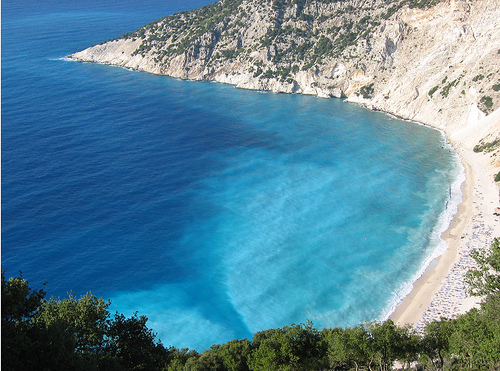
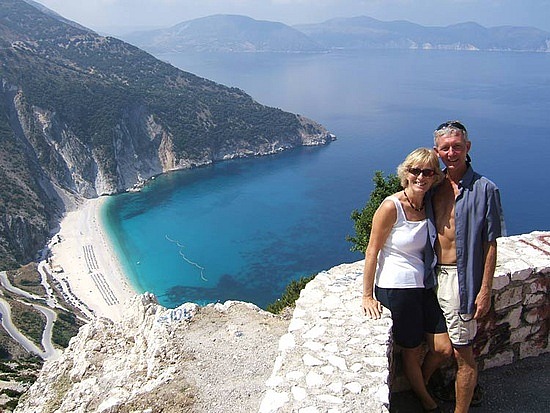
Myrtos Beach is one of the most dramatic on the largest of the Ionian Greek islands. It is located about twenty miles north of the capital city of Argostoli near the charming little town of Assos. Like Porto Katsiki Beach on nearby Lefkada, Myrtos Beach Kefalonia is set at the foot of high, steep cliffs in a deep and wide bay. Before descending the cliffs to the beach below, it is worth spending some time savoring the spectacular views from above. Myrtos Beach holidays take advantage of one of the most scenic and photographed spots in all the islands.

Myrtos Beach has a number of services, including shopping, cafés, and tavernas, and you can rent sun beds and umbrellas. There is little shade here, so an umbrella or sunscreen is important. When you settle yourself on the fine white sand, you should take some care on either end of the beach. The cliffs are quite close to the water in these two areas, and there is a danger of falling rocks—that's why you will see fewer people in those two places. The beach is very wide in the center, so that portion of the beach is quite safe. Wind and waves pick up in the afternoon, so this is when to go if you want your Myrtos Beach holidays to include windsurfing. The best transportation to get here is a car or motor scooter rental. The road is twisting and steep, and those with walking issues may wish to choose a more accessible beach where you don't have to walk down steps carved into the cliffs. You can also book day trips to Myrtos Beach Kefalonia by boat from many of the towns and villages along the coast.
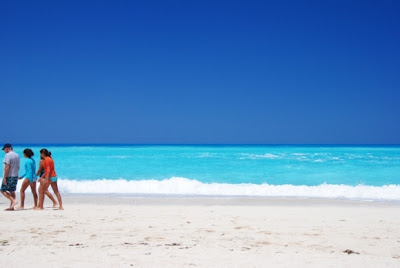
Myrtos Beach
There are few Myrtos Beach hotels right at the beach. Although you can find some nice apartments and residences in Assos, most visitors enjoying Myrtos Beach holidays will choose accommodation in the resort town of Agia Efemia, which is located on the opposite (eastern) side of the island about five miles away. Most of these are two- and three-star studios and apartments, making this a very popular place for family vacations. A couple miles south of Agia Efemia is the port town of Sami, where Greece ferries from other islands (as well as the city of Brindisi in Italy) dock. Here you will find the only five-star property on the island, the Ionian Emerald Resort. It's actually in the nearby village of Karavomylos, and offers a café, restaurant, bar, full-service spa and fitness center, and children's play facilities. The distance from here to Myrtos Beach is only nine miles.

Things to do around Myrtos Beach Kefalonia include sightseeing in the charming villages, which boast numerous old churches and monasteries. Near Assos in Fiskardo are the ruins of an old Venetian palace, and the coast has a number of caves that were used in ancient times. There are many other beautiful beaches, including some that are nesting sites for the rare loggerhead and green sea turtle. The Archaeological Museum in Argostoli is excellent, and you will find wonderful traditional Greek tavernas and dining spots in most of the larger towns and villages.

The beautiful beach at Myrtos Bay, on the Ionian island of Kefalonia, is known as Myrtos and is backed by steep limestone cliffs.

Myrtos Beach
Why go?
Myrtos is often lauded as one of the most dramatic beaches in Greece with its mile-and-a-half long arc of dazzling white pebbles that cuts deep into a sheer cliff on the island’s northwest coast. Film buffs will recognise it as the location for the mine explosion in Captain Corelli’s Mandolin and the first time you catch sight of it from the coast road high above is truly memorable.

What is there to do?
Unless you can handle the sun all day, this is a great spot to come in the late afternoon for a glorious Ionian sunset. Despite its popularity, the beach has been kept free of watersports, so swimming is the only exercise available.

Bars and bites
A local ordinance banning permanent structures means only the odd mobile canteen is tucked at the back of the beach. Traditional Greek meals, washed down with the excellent local Robola wine, are available three miles uphill at the simple Klima grill or Alexandros taverna in Divarata village. You’ll have to head into to the capital Argostoli for nightlife options.

Getting there
The nearest you can get by public transport is the top of the winding three-mile approach road on any bus bound for Assos or Fiskardo. Consequently, a hired vehicle or stout legs are the way to go. Kefalonia has daily flights from Athens and several weekly services from the UK, while ferries leave from Patra and Kyllini on the mainland.

Tuesday, May 15, 2012

Nepenthes Can Get Rid Of The Mosquitoes


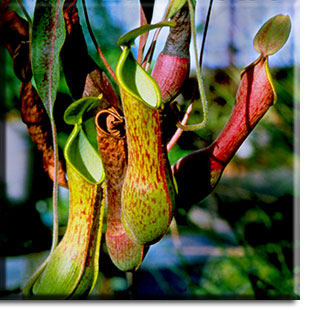
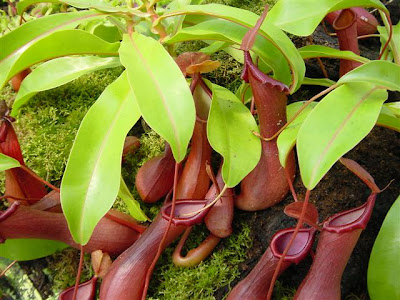
Nepenthes
Nepenthes can be grown in a variety of containers, but plastic pots are generally preferred because they are economical, lightweight, and come in a great range of sizes. Most Nepenthes will do well in a one-gallon pot, but some of the larger species (N. bicalcarata, N. merrilliana, N. sumatrana, others) require containers of 4-5 gallons to reach full size. Seedlings and young plants can be grown in 4-6 inch pots or trays. Clay pots, though attractive, are avoided by many growers due to the belief that they accumulate harmful salts and chemicals. However, experience shows that healthy Nepenthes can be grown for many years in clay pots, especially if they are given high-qualtiy pure water.

Containers should always have sufficient holes to permit rapid drainage and good soil aeration. Hanging baskets and pots are an excellent way to display larger specimens, and allows for the trailing vines and tendrils to grow without support.

The far more common method of Nepenthes propagation for the hobbyist or small scale nursery is stem cuttings. The exact details of the procedure vary considerably between different growers, so the following are guidelines that can be easily modified.

When to take cuttings: Nepenthes cuttings can be taken at any time of the year, but the cuttings taken when the parent plant is actively growing seem to take faster and have greater success rate. This probably has more to due with the health and vigor of parent plant than the actual cutting time. If the parent plant is growing well, chances are the cuttings will do well under the same conditions. If the parent plant is not doing well, the temperature could be too hot or cold and the cuttings may not root well under those conditions.

What material to take for cuttings: The ideal Nepenthes propagation situation is a plant that has a tall climbing stem with widely-separated leaves and a new basal rosette of leaves. In this case, the climbing stem (either the whole stem or just the tip) can be taken as cutting material leaving the parent plant with an intact basal rosette. If you only want to generate a single new plant, then the active growing tip of the stem with about 2 to 3 leaves is the absolute best cutting material. The stem on the parent plant will generally re-sprout near the tip assuming there are still green leaves on that stem. It will take the parent plant a few months to re-sprout and look presentable again. If you want to generate a large number of plants, then clip the entire climbing stem so the plant has just a basal rosette.

If the plant lacks a basal rosette there are two options. The cuttings can be taken immediately but do leave at least 4 green leaves on the stem. If it is a long stem it may be better to encourage the plant to grow a new basal rosette. You do this by laying the pot on the side and letting the long stem go out horizontally or, even better, hang down. In a few months the plant should sprout a new basal rosette an you can remove the whole climbing stem.

Nepenthes
Some growers suggest cutting the leaves in half, thus leaving only the half of the leaf nearest the stem. The reason for cutting the leaf in half is to reduce transpiration from the leaf and thus reducing the chance that the cutting will dry out. However, if the cuttings are sealed in a plastic bag that ensures a very high humidity, then this is not necessary. Pitchers can also be left on if desired, but they typically make the cuttings hard to fit in a bag (particularly if there are many cuttings in a single pot) so I typically remove them.

Some growers split the stem up about 10 mm from cut end. Do it under water and in such a way as the blade is NEVER pointed toward any of your body parts you want to keep. After the stem is split, shove a small piece of Sphagnum moss up the slit to hold the two sides somewhat apart. Some growers use rooting hormone on the cut edges. In our experience using hormone is not helpful and too strong a hormone concentration can actually keep the cuttings from forming roots. If the cutting forms a callus but no roots then the hormone is too strong. If you still want to use a hormone, you should never dip the cutting into the jar of hormone as this would contaminate it. Pour out a small amount on a piece of paper and touch the cut edge to hormone on the paper or use a small brush to apply a small amount. If you use a liquid hormone use the amount recommended for soft wood cuttings at the recommended time in the solution.

This once named cultivar was found a top a tall, misty mountain in the tropics region where Nepenthes originate from. A expedition was planned up to the mountain in the late 80′s to see what types of Nepenthes lived up there. Once they reached the top, the Nepenthes experts from Borneo Exotics Inc. found a Nepenthes Truncata that was way darker than any other of the normal specimens observed in cultivation. The big Nepenthes was lofted in the notch of a high tree. Since the plant was flowering female, the experts decided to collect seeds from it, and headed back down to the nursery.

Many years later seven dark seedlings were chosen out of the seed batch and have since been raised to big tall plants. Each plant was given a cultivar name like N. Truncata ‘king of clubs” and so forth. The two most interesting Nepenthes, N. Truncata “Queen of Hearts” and N. Truncata “King of Spades”, decided to flower. Now, their colorful and sought after offspring have been spread to growers all around the world, including me.