Thursday, August 2, 2012

Mesmerized Beauty of Nature Himachal

Fondly referred as the ‘Devbhoomi', Himachal Pradesh located in the northern part of Indian subcontinent. The valley is spectacularly soaked in the mesmerizing beauty of nature with undulating snow clad mountain peaks, green lush forests, serene lakes, raging rivers, alpine meadows and stunning hill stations.
Himachal Tour Packages unleash numerous holiday destinations and sites that offer memorable holiday experience to the tourists. Hill stations such as Shimla, Manali, Kullu, Dalhousie, Dharamshala, Kufri, Solan, Chamba valley, Chail, Kangra Valley, Kasauli, Lahaul and Spiti Valley are the some of the most popular tourist destination in the state. All these peaceful destinations are located in blissful natural setting with spectacular natural beauty, pleasant climate, cool and serene environment and charming attractions that attracts the tourists from all corners of the world. Himachal Pradesh Tourism has also contributed a lot in upgrading the infrastructural facilities in the state, which make the state a perfect place to visit.
The state is blessed by wealth of natural beauty and dotted with most fascinating hill destinations of the country. Himachal Pradesh tourism is not only acclaimed for its beautiful hill stations but also known for incorporating various ancient temples and spiritual sites. Undulating slopes of its valley serves as the pristine platform to engage in adventurous activities. In Himachal, a tourist can enjoy adventure activities like trekking, mountaineering, skiing, white water rafting, rock climbing, kayaking, hiking, heli skiing, para gliding, fishing, angling, camping, etc. While, in the places like Rohtang Pass and Solang Valley, one can have the ethereal experience in absolute snowfall, Lahaul and Spiti valley offers the beauty of Stark lunar landscape.
This beautiful state of India is the perfect place to enjoy vacation or honeymoon in the lap of Himalaya. Each of the hill station and plain valley is endowed with blessings of nature that never fails to lure the attention of tourists throughout the year. Nahan, Mandi, Khajjiar, Chail, Paonta Sahib, Sirmaur are other lesser known places in Himachal which equally offer natural splendor. These places are far away from humdrums of tourist's rush and serves as the peaceful getaways for discerning travelers. If you really want to experience unexplored beauty of nature and its ecstasy, you must visit this paradisiacal land on the earth. Visit the land and enjoy your holiday to the fullest in a most memorable and delightful way.

Tuesday, July 17, 2012

Enjoy The Nature Beauty Of Ansoo Lake

It shapes is like a tear or u can say ansoo ...so its called ansoo lake......basically... once a time the whole vally is flooded by melting of glasiers and thats who this lake sums up...and unfortunatly its shape is like a ansoo..wow.
Ansoo Lake is a high-altitude lake (elevation 16,490 feet or 5,027 metres) in the Kaghan Valley in the Mansehra District of the North-West Frontier Province of Pakistan. It is near Malika Parbat in the Himalayan range.
It can be reached by a difficult trek from Saiful Mulook Lake. The name comes from its tear-like shape (the Urdu word Ansoo means teardrop). The lake is said to have been discovered in 1993 by Pakistan Air Force pilots who were flying low above the area. Earlier, the lake was not even known to the locals.

Unlike all other lakes (except some one) this lake is not located in a valley but on a peak top and is highest lake in the world. I have found it on Google Earth!
Ansoo Lake is a high-altitude lake (elevation 13,540 feet or 4,126 metres) in the Kaghan Valley in the Mansehra District of the North-West Frontier Province of Pakistan. It is near Malika Parbat in the Himalayan range.
It can be reached by a difficult trek from Saiful Mulook Lake and requires physical and mental fitness. If one chooses to walk it takes more than eight hours for a round trip starting from lake Saif ul Muluk. The trek is covered with snow in most parts of the year. The best time to trek is from 25th July to 30th August. The optimal time to set off for the lake is around 09:00 in the morning. Horses can also be hired from the Lake Saif ul Muluk along with a guide person who will take you to Ansoo Lake. It costs almost PKR 800-1000 per horse. Another trek to reach Ansoo Lake is from Mahandri, which is 40 km below Naran, but this is a less trod route and the difficulties are unknown. The name "Ansoo" comes from its tear-like shape (the Urdu word Ansoo means teardrop). The lake is said to have been discovered in 1993 by Pakistan Air Force pilots who were flying low above the area. Earlier, the lake was not even known to the locals.

Sunday, June 17, 2012

The Most Beautiful Landscapes In Greece - Myrtos Beach

Searching for a great last minuet cheap package holidays deal? Why not check out the Island of Greece with night life, long sandy stretch beaches, glorious sunshine and culture a plenty. There are plenty of Greek package holidays to choose from, and here are some Greek destinations that travel experts proclaim are the most recommended for travelers to seek out if they want to see some of the most beautiful landscapes in Greece and have a great time.

Myrtos Beach
Kefalonia Geography

Kefalonia is a beautiful Ionian Island in the Western Greece, popularised most recently by Louis De Berniéres portrayal of his picturesque Kefalonian village in his best selling Captain Corelli’s Mandolin. The island is densely covered in vegetation and has a wonderfully diverse range of diverse natural beauty. Its beaches, particularly are known for their beauty, and Myrtos Beach has recently been ranked fifth in the world, making it a major tourist attraction.

For those interested in history, The Argostoli Archaeological Museum is well worth a visit, showcasing a plethora of artefacts ranging from the Neolithic to the Hellenistic period, this museum has informative and easy to digest information. For something a little bit different, the Historic and Folklore Museum in Korgialenio houses exhibitions of utilitarian and military objects that serve to illustrate the island’s cultural history. For those more geologically inclined, the Natural History Museum in Daugata exhibits a wide range of flora, fauna and fossils.

There are a number of beaches on Kefalonia which are inaccessible by land but worth seeing nonetheless. Hiring a boat for the day will mean that you can take advantage of the solitude of these idyllic spots. Swimming and Scuba Diving near these coves and caves are also hugely popular pastimes.

Myrtos Beach

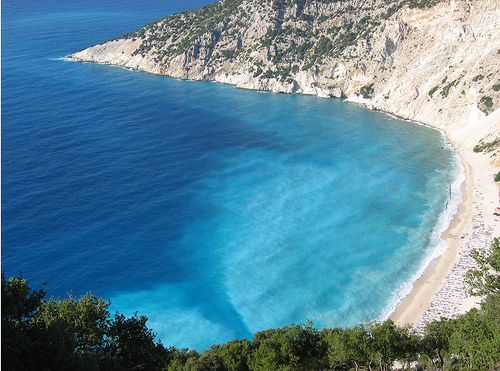
Myrtos Beach is one of the most dramatic on the largest of the Ionian Greek islands. It is located about twenty miles north of the capital city of Argostoli near the charming little town of Assos. Like Porto Katsiki Beach on nearby Lefkada, Myrtos Beach Kefalonia is set at the foot of high, steep cliffs in a deep and wide bay. Before descending the cliffs to the beach below, it is worth spending some time savoring the spectacular views from above. Myrtos Beach holidays take advantage of one of the most scenic and photographed spots in all the islands.

Myrtos Beach has a number of services, including shopping, cafés, and tavernas, and you can rent sun beds and umbrellas. There is little shade here, so an umbrella or sunscreen is important. When you settle yourself on the fine white sand, you should take some care on either end of the beach. The cliffs are quite close to the water in these two areas, and there is a danger of falling rocks—that's why you will see fewer people in those two places. The beach is very wide in the center, so that portion of the beach is quite safe. Wind and waves pick up in the afternoon, so this is when to go if you want your Myrtos Beach holidays to include windsurfing. The best transportation to get here is a car or motor scooter rental. The road is twisting and steep, and those with walking issues may wish to choose a more accessible beach where you don't have to walk down steps carved into the cliffs. You can also book day trips to Myrtos Beach Kefalonia by boat from many of the towns and villages along the coast.

Myrtos Beach
There are few Myrtos Beach hotels right at the beach. Although you can find some nice apartments and residences in Assos, most visitors enjoying Myrtos Beach holidays will choose accommodation in the resort town of Agia Efemia, which is located on the opposite (eastern) side of the island about five miles away. Most of these are two- and three-star studios and apartments, making this a very popular place for family vacations. A couple miles south of Agia Efemia is the port town of Sami, where Greece ferries from other islands (as well as the city of Brindisi in Italy) dock. Here you will find the only five-star property on the island, the Ionian Emerald Resort. It's actually in the nearby village of Karavomylos, and offers a café, restaurant, bar, full-service spa and fitness center, and children's play facilities. The distance from here to Myrtos Beach is only nine miles.

Things to do around Myrtos Beach Kefalonia include sightseeing in the charming villages, which boast numerous old churches and monasteries. Near Assos in Fiskardo are the ruins of an old Venetian palace, and the coast has a number of caves that were used in ancient times. There are many other beautiful beaches, including some that are nesting sites for the rare loggerhead and green sea turtle. The Archaeological Museum in Argostoli is excellent, and you will find wonderful traditional Greek tavernas and dining spots in most of the larger towns and villages.

The beautiful beach at Myrtos Bay, on the Ionian island of Kefalonia, is known as Myrtos and is backed by steep limestone cliffs.

Myrtos Beach
Why go?
Myrtos is often lauded as one of the most dramatic beaches in Greece with its mile-and-a-half long arc of dazzling white pebbles that cuts deep into a sheer cliff on the island’s northwest coast. Film buffs will recognise it as the location for the mine explosion in Captain Corelli’s Mandolin and the first time you catch sight of it from the coast road high above is truly memorable.

What is there to do?
Unless you can handle the sun all day, this is a great spot to come in the late afternoon for a glorious Ionian sunset. Despite its popularity, the beach has been kept free of watersports, so swimming is the only exercise available.

Bars and bites
A local ordinance banning permanent structures means only the odd mobile canteen is tucked at the back of the beach. Traditional Greek meals, washed down with the excellent local Robola wine, are available three miles uphill at the simple Klima grill or Alexandros taverna in Divarata village. You’ll have to head into to the capital Argostoli for nightlife options.

Getting there
The nearest you can get by public transport is the top of the winding three-mile approach road on any bus bound for Assos or Fiskardo. Consequently, a hired vehicle or stout legs are the way to go. Kefalonia has daily flights from Athens and several weekly services from the UK, while ferries leave from Patra and Kyllini on the mainland.

Tuesday, May 15, 2012

Nepenthes Can Get Rid Of The Mosquitoes


Nepenthes
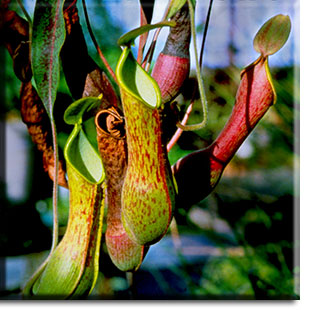
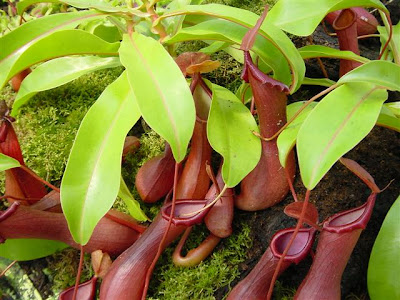
Nepenthes can be grown in a variety of containers, but plastic pots are generally preferred because they are economical, lightweight, and come in a great range of sizes. Most Nepenthes will do well in a one-gallon pot, but some of the larger species (N. bicalcarata, N. merrilliana, N. sumatrana, others) require containers of 4-5 gallons to reach full size. Seedlings and young plants can be grown in 4-6 inch pots or trays. Clay pots, though attractive, are avoided by many growers due to the belief that they accumulate harmful salts and chemicals. However, experience shows that healthy Nepenthes can be grown for many years in clay pots, especially if they are given high-qualtiy pure water.

Containers should always have sufficient holes to permit rapid drainage and good soil aeration. Hanging baskets and pots are an excellent way to display larger specimens, and allows for the trailing vines and tendrils to grow without support.

The far more common method of Nepenthes propagation for the hobbyist or small scale nursery is stem cuttings. The exact details of the procedure vary considerably between different growers, so the following are guidelines that can be easily modified.

When to take cuttings: Nepenthes cuttings can be taken at any time of the year, but the cuttings taken when the parent plant is actively growing seem to take faster and have greater success rate. This probably has more to due with the health and vigor of parent plant than the actual cutting time. If the parent plant is growing well, chances are the cuttings will do well under the same conditions. If the parent plant is not doing well, the temperature could be too hot or cold and the cuttings may not root well under those conditions.

What material to take for cuttings: The ideal Nepenthes propagation situation is a plant that has a tall climbing stem with widely-separated leaves and a new basal rosette of leaves. In this case, the climbing stem (either the whole stem or just the tip) can be taken as cutting material leaving the parent plant with an intact basal rosette. If you only want to generate a single new plant, then the active growing tip of the stem with about 2 to 3 leaves is the absolute best cutting material. The stem on the parent plant will generally re-sprout near the tip assuming there are still green leaves on that stem. It will take the parent plant a few months to re-sprout and look presentable again. If you want to generate a large number of plants, then clip the entire climbing stem so the plant has just a basal rosette.

If the plant lacks a basal rosette there are two options. The cuttings can be taken immediately but do leave at least 4 green leaves on the stem. If it is a long stem it may be better to encourage the plant to grow a new basal rosette. You do this by laying the pot on the side and letting the long stem go out horizontally or, even better, hang down. In a few months the plant should sprout a new basal rosette an you can remove the whole climbing stem.

Nepenthes
Some growers suggest cutting the leaves in half, thus leaving only the half of the leaf nearest the stem. The reason for cutting the leaf in half is to reduce transpiration from the leaf and thus reducing the chance that the cutting will dry out. However, if the cuttings are sealed in a plastic bag that ensures a very high humidity, then this is not necessary. Pitchers can also be left on if desired, but they typically make the cuttings hard to fit in a bag (particularly if there are many cuttings in a single pot) so I typically remove them.

Some growers split the stem up about 10 mm from cut end. Do it under water and in such a way as the blade is NEVER pointed toward any of your body parts you want to keep. After the stem is split, shove a small piece of Sphagnum moss up the slit to hold the two sides somewhat apart. Some growers use rooting hormone on the cut edges. In our experience using hormone is not helpful and too strong a hormone concentration can actually keep the cuttings from forming roots. If the cutting forms a callus but no roots then the hormone is too strong. If you still want to use a hormone, you should never dip the cutting into the jar of hormone as this would contaminate it. Pour out a small amount on a piece of paper and touch the cut edge to hormone on the paper or use a small brush to apply a small amount. If you use a liquid hormone use the amount recommended for soft wood cuttings at the recommended time in the solution.

This once named cultivar was found a top a tall, misty mountain in the tropics region where Nepenthes originate from. A expedition was planned up to the mountain in the late 80′s to see what types of Nepenthes lived up there. Once they reached the top, the Nepenthes experts from Borneo Exotics Inc. found a Nepenthes Truncata that was way darker than any other of the normal specimens observed in cultivation. The big Nepenthes was lofted in the notch of a high tree. Since the plant was flowering female, the experts decided to collect seeds from it, and headed back down to the nursery.

Many years later seven dark seedlings were chosen out of the seed batch and have since been raised to big tall plants. Each plant was given a cultivar name like N. Truncata ‘king of clubs” and so forth. The two most interesting Nepenthes, N. Truncata “Queen of Hearts” and N. Truncata “King of Spades”, decided to flower. Now, their colorful and sought after offspring have been spread to growers all around the world, including me.

Sunday, May 6, 2012

Take A Look At Some Of The Interesting Factors Of The Bermuda Grass


Bermuda Grass
Bermuda grass has originated from the African Savannas and is also the main grass of the tropical and sub-tropical regions. Known to survive well in dry conditions, it is best grown in areas that have heavy rainfall. This is because with heavy rainfall, the leaves remain moist. The Bermuda grass is also known to re-grow quickly in times when it get destroyed due to fire.

What exactly is Bermuda Grass?

Bermuda grass is found throughout the southern states in the USA. This is generally found in warmer climates and can be found in pastures and open woodlands. The ‘Cynodon dactylon’ or the Bermuda grass is known as Bermuda in the United States simply because it was introduced from the Bermuda island.

The Bermuda grass not only recovers quickly from fires, it can even grow at a fast pace in poor soil. This kind of grass can even re-grow even if it is cut. This is because it has long roots, which are often difficult to destroy. The common Bermuda grass is therefore drought resistant and can also make a good turf if it is tended to, with care. These can be easily planted with the help of the Bermuda grass seed; and with great care it can prove to be a very high quality lawn grass.

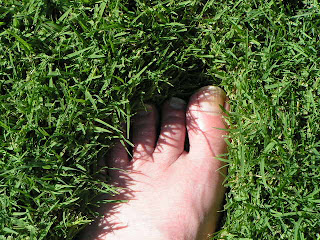
The Bermuda grass is used for lawns, tennis courts, golf courses and other such landscaping areas. The golf courses generally make use of the Bermuda grass very extensively. This Bermuda grass is low on maintenance and can face the strength of the full sunlight. The Bermuda grass seed heads are quite similar to the seed heads of the crab grass. Therefore, these are frequently confused with each other. This kind of grass is also known to form a thick or dense mat on the ground. Therefore, the Bermuda grass is also known as a creeping grass because whenever the node touches the ground, it tends to reproduce from the roots that are under the ground. The Bermuda grass seed heads are generally around 1-3 inches in size and start growing within two weeks.

There are two varieties of Bermuda grass:
The Common Bermuda
The Hybrid Bermuda

The common Bermuda has a medium texture, whereas the hybrid variety has a fine texture.

Uses of Bermuda Grass:
  • Apart from the home lawns and the golf courses, the Bermuda grass is considered to be very sacred amongst the Hindus in India. The juice when squeezed from the stems can be used as an astringent for medical purposes.
  • Bermuda grass is also used in homeopathy where the juice is used with other medicines. It is also known to increase the strength of the body by making it resistant to common allergies.
  • The Bermuda grass is also useful in the farming and animal husbandry section.
  • It also proves to be an excellent grass for cattle and it can prevent land soil erosion which may be caused due to an excess amount of water during the rains.
Maintenance of Bermuda Grass:
  • One has to keep a track of the schedule for fertilizing the Bermuda grass. Follow a timetable that would require you to add fertilizers every 45 days.
  • Ensure that you water it deeply. Watering this grass deeply would ensure that it has deep roots and this would in turn make your grass look good especially during the summer season. This would also largely depend on the consistency of the soil.
  • Ensure that you mow it regularly.
  • In order to prevent winter weeds, you can check the market to stock certain pesticides that can prevent weeds from growing in the lawns. Ask the local store about the certain months you may need to stick to this practice, to apply these pesticides to keep your lawn looking at its best at all times.
The Bermuda grass thus proves to be a very good choice when it comes to a hot and sunny climate and it is also known to be very resilient and resistant to common everyday wear and tear that can happen in the garden. The Bermuda grass therefore scores high and is very popular due to its low maintenance factor.

Thursday, May 3, 2012

Provide You Detailed Facts About A Guava Tree And Its Growth


Guava Tree
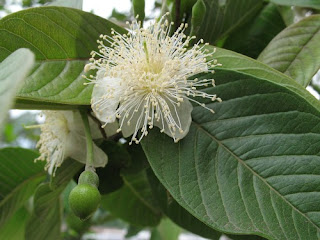
Guava trees are members of the myrtle family of tropical trees and shrubs. Guava is also called Psidium in Latin. The myrtle family consists of 100 species of tropical plants and trees. Tropical climate suits guava trees and they are native to Mexico, Central America, and northern South America. It grows in abundance in some parts of southeast Asia, the Caribbean and some parts of Africa. A guava tree normally reaches up to a height of four meters and has large leaves with blazing veins. The tree bears white color flowers that possess many stamens which mature into a pear shaped, yellow color fruit which has numerous seeds.

How to Grow Guava Tree

Climatic Requirements: Ideally guava trees require warm climate to grow. They normally are found in countries with hot summers and cool winters. Vegetation and fruits grow in abundance if the temperature is in between 15°C and 28°C. The flowers come out in 3 to 6 months and bear fruits. During this fruit bearing stage, if the temperature falls below 15°C, the quality of fruit suffers. The tree is well adapted to both summer and winter temperatures. They can also survive in droughts very well and grow best in areas which receive almost 1000 to 1500 mm of rainfall. If the rain is sparse, trees should be watered during the dry period, especially if there are fruits.

Soil Required: Basically all types of soil suit the growth of a guava tree. The trees are normally found near streams, brooks and rivers. They survive in these areas despite the excessive water logging and poor soil conditions. If you want a well-grown guava tree, you should plant it in well-drained soils. They can also be grown in soils which are not suitable for many other plants.

Soil Preparation: Before planting a new guava plant, examine the soil carefully with respect to its depth, drainage and compacted layers. The ideal depth of the soil to plant a guava tree should be 800 mm.

Planting the Guava Tree: The recommended planting distance is 2 m between each tree in a row. If you want your guava tree to always remain healthy and productive make sure it is not planted too close to each other. If you are planting thes trees on a large-scale make sure that the space between them must be enough to pass tractors, spraying machines and laborers.

Pruning Guava Trees
  • You can start pruning young guava plants when they are only 3 to 4 months old. Always prune grown guava trees after summer when they have borne fruits.
  • Take out all the ground root suckers and dead wood which gets accumulated on the tree. Skirt infected branches will stop the fruiting of this tree and can also cause harm to the tree.
  • Always prune a guava tree in a judicious manner. Make a cut above the lateral branch, take care that you don't chop of branches which are bearing new flowers.
  • Avoid pruning any dead parts of the tree which may have died due to weather conditions. You can remove the dead branches at any time.
  • Pruning with dirty or dull tools may cause a long term damage to the tree. Always make sure that your cutting tools are clean and sanitized before you prune any tree or plant.
Guava Tree Care
  • Guavas are climatic fruits. They can be picked green and will still ripen in storage and shipping. Always place it in a sunny location away from other trees. Make sure the soil is free from flooding and it drains well after rainfall.
  • Don't allow any tree or grass to grow around the tree's location as it will interfere with the guava tree's growing process.
  • Enrich the tree four to six times a year using a good quality fertilizer. You can also use nutritional sprays which contain zinc, manganese, boron and iron.
  • Water the guava tree every alternate day in the first week. Never water the tree during the rainy seasons.
  • Always keep an open eye for the Caribbean fruit fly, the guava moth, the red banded thrip and the guava white fly.
  • Covering the fruit with a paper bag has also proved useful in preventing insect infestation. If you want professional help, get in touch with the local Agricultural Organization.
Guava tree will remain evergreen if it is nurtured and cared properly. I hope by reading this article you will think about planting a guava tree in your garden.